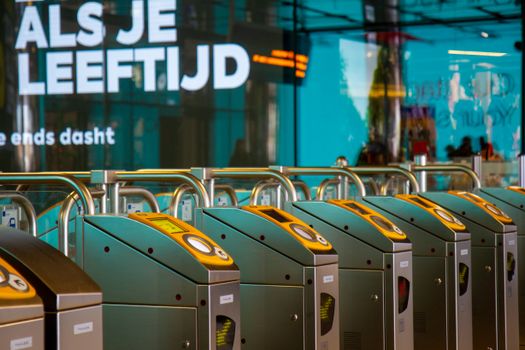
The Hook: The End of the Paper Trail
I stepped off the plane at Singapore Changi, the scent of orchids and expensive air filtration hitting me instantly. Usually, this is the moment the "travel anxiety" kicks in—the frantic patting of pockets for a passport, the scanning of the horizon for the back of a 400-person queue. But this time was different. I didn’t reach for my bag. I didn’t even slow my pace.
As I approached the automated gate, a soft blue light scanned my iris and mapping my facial geometry in milliseconds. The glass doors slid open with a satisfying shick sound. No stamps, no stern questions, no friction. This is the reality of modern testing infrastructure making travel easier worth considering. We are moving toward a world where your body is your boarding pass, and the infrastructure around you anticipates your needs before you even realize you have them.
1. The Biometric Revolution: Your Face is the Key
The most visible (yet invisible) part of new travel infrastructure is the transition to biometrics. Major hubs are currently "stress-testing" systems that link your digital identity to your physical self.
SITA and the "Walk-Through" Experience
At airports like Dubai International and Tokyo Narita, they are testing "Smart Path" technology. This isn't just a fancy camera; it’s a backend overhaul. By integrating airline check-in data with government border security, the infrastructure allows you to drop your bags, enter the lounge, and board the plane without showing a single document.
Pro-Tip:
If you’re flying through London Heathrow or Atlanta Hartsfield-Jackson, look for the "Biometric Boarding" lanes. Even if you haven't pre-registered, many airlines are now pulling data from your passport chip at the first touchpoint to facilitate a paperless gate entry later.
2. Digital Nomad Infrastructure: Beyond Just Fast Wi-Fi
When we talk about infrastructure making travel easier, we have to look at how "work-from-anywhere" is being codified. Countries like Estonia and Costa Rica aren't just offering visas; they are testing "Digital Hub" ecosystems.
The Rise of the Managed Workspace
In Madeira, Portugal, the government helped fund the "Digital Nomad Village." This isn't just a coworking space; it’s a testing ground for community-integrated infrastructure. They’ve streamlined local registration, provided mesh-network 5G across public squares, and integrated local transport into a single digital "Nomad Card."
Pro-Tip:
Don't just book an Airbnb. Look for "Coliving" certifications in these regions. These buildings are hardwired with redundant fiber-optic lines, meaning you won't lose connection during that high-stakes Zoom call because someone used the microwave.
3. High-Speed Rail: The "Seamless" Land Alternative
Infrastructure isn't just about flying. In Europe and Asia, the "testing infrastructure making travel easier worth considering" involves the integration of rail and air.
Intermodal Connectivity
Germany’s Lufthansa and Deutsche Bahn have perfected the "AirRail" system. You can check your bag at a train station in Stuttgart, and it magically appears at your final destination in New York. The infrastructure handles the "last mile" logistics, treating the train carriage as an extension of the airplane cabin. This reduces the carbon footprint and the mental load of navigating multiple transit systems.
4. The "Last Mile" and Smart City Navigation
Once you arrive, the hardest part is often getting from the terminal to your hotel. This is where "Mobility as a Service" (MaaS) comes in.
The Unified App Ecosystem
Cities like Helsinki and Zurich are testing unified transit apps that combine trams, ferries, e-bikes, and trains into a single QR code. No more standing in front of a confusing kiosk trying to buy a 3-day pass with a credit card that won't read.
Insider Language:
This is often called "Frictionless Urbanism." It’s the idea that the city itself acts as a giant, automated concierge.
5. Quick Facts & Logistics: The Modern Traveler’s Cheat Sheet
| Feature | Best Example | Estimated Cost | Why It Matters |
| :--- | :--- | :--- | :--- |
| Biometric Entry | Changi (Singapore) | Free (Included in fees) | Cuts wait times by 60% |
| Digital Nomad Visa | Estonia | $100 - $150 | Legal right to work/live |
| High-Speed Rail | JR Central (Japan) | $100+ (Varied) | Faster than flying door-to-door |
| MaaS Apps | Whim (Helsinki) | Subscription or Pay-as-go | One app for all city transport |
6. Sustainable Infrastructure: The "Green" Backbone
We cannot ignore that the infrastructure making travel easier is also becoming more eco-conscious. "Green" testing is happening in the form of Sustainable Aviation Fuel (SAF) pipelines and electric ferry networks in the Norwegian fjords.
The Tactile Experience of Eco-Travel
In the Maldives, several resorts are testing "off-grid" infrastructure. Instead of noisy diesel generators, they use floating solar platforms. As a traveler, the benefit is twofold: you get a guilt-free vacation and a significantly quieter, more "natural" sensory experience. You hear the waves, not the machinery.
7. Pro-Tips for Navigating New Infrastructure
* The 7 AM Rule: Most new biometric systems undergo software updates or "soft resets" late at night. For the smoothest experience, early morning flights often see the systems running at peak efficiency.
* The Hidden Entrance: At many high-tech airports, the "biometric" or "registered traveler" lanes are located at the far ends of the terminal, away from the central congestion.
* App Hygiene: Before you leave, download the official "National" travel app of your destination (e.g., Suica for Japan, Reise for Norway). These apps often have features that aren't available on Google Maps, like real-time platform changes or "crowd density" indicators for train cars.
8. Authenticity: Why This Matters Beyond the Tech
It’s easy to get bogged down in the "gadgetry" of it all, but the real reason testing infrastructure making travel easier worth considering is because it gives us our time back.
When I’m not standing in a line, I’m sitting in a small pasticceria in Trastevere, smelling the toasted flour and yeast of a fresh cornetto. When I’m not arguing with a ticket machine, I’m looking up at the intricate Gothic rib-vaulting of a cathedral I would have otherwise rushed past.
Modern infrastructure isn't about replacing the human experience; it’s about removing the mechanical hurdles that prevent us from fully immersing ourselves in it. The "smart" city is only smart if it allows you to be more human.
---